The winter workouts that last until spring are built indoors first. Start with ten minutes of bodyweight strength work at home, twice a week. Keep it on fixed days, right after something you already do. Then add a walk outside on any day the weather allows.
The order matters because winter can cancel outdoor plans and gym trips for days at a time. Nothing cancels ten minutes on the living room floor.
I learned that order the slow way. For years I wrote a twelve-week winter plan every November and dropped it by week four, usually the first week the roads iced over. The plans were good ones, too, for a person whose driveway never froze. Now I plan one week at a time and keep a ten-minute fallback. I use it far more often than I expected when I first wrote it down.
We tend to blame willpower when a winter plan falls apart. More often the plan depended on daylight, dry pavement and a clear drive to the gym, and December took all three away.
Ten minutes, twice a week, indoors
A short session works because the hard part of a winter workout is beginning it, and a short one is easy to start. It needs no drive, no gear and no daylight, so a storm can’t touch it.
Pick two days that aren’t back to back, so your muscles get a rest day in between. Monday and Thursday will do.
Then attach the session to something that already happens on those days, because a cue does the remembering for you. Right after the coffee starts is one. The minute you get home, before you sit down, is another.
Do these five moves in order, eight to twelve repetitions each.
- Squats, down to a chair if you want a target
- Push-ups, with your hands on the kitchen counter if the floor version is too much
- Glute bridges, lying on your back with your knees bent
- Rows, pulling a loaded backpack up toward your ribs with one arm and then the other
- Sit-ups, or a plank held for 20 to 30 seconds
One round takes about five minutes, and two rounds make the ten. Between them the moves work your legs, hips, back, chest, shoulders, arms and midsection. That matters because two days a week for every major muscle group is what the federal activity guideline asks for on the strength side.
Exercises that use your own body weight for resistance count toward it, so nothing is missing for lack of equipment.
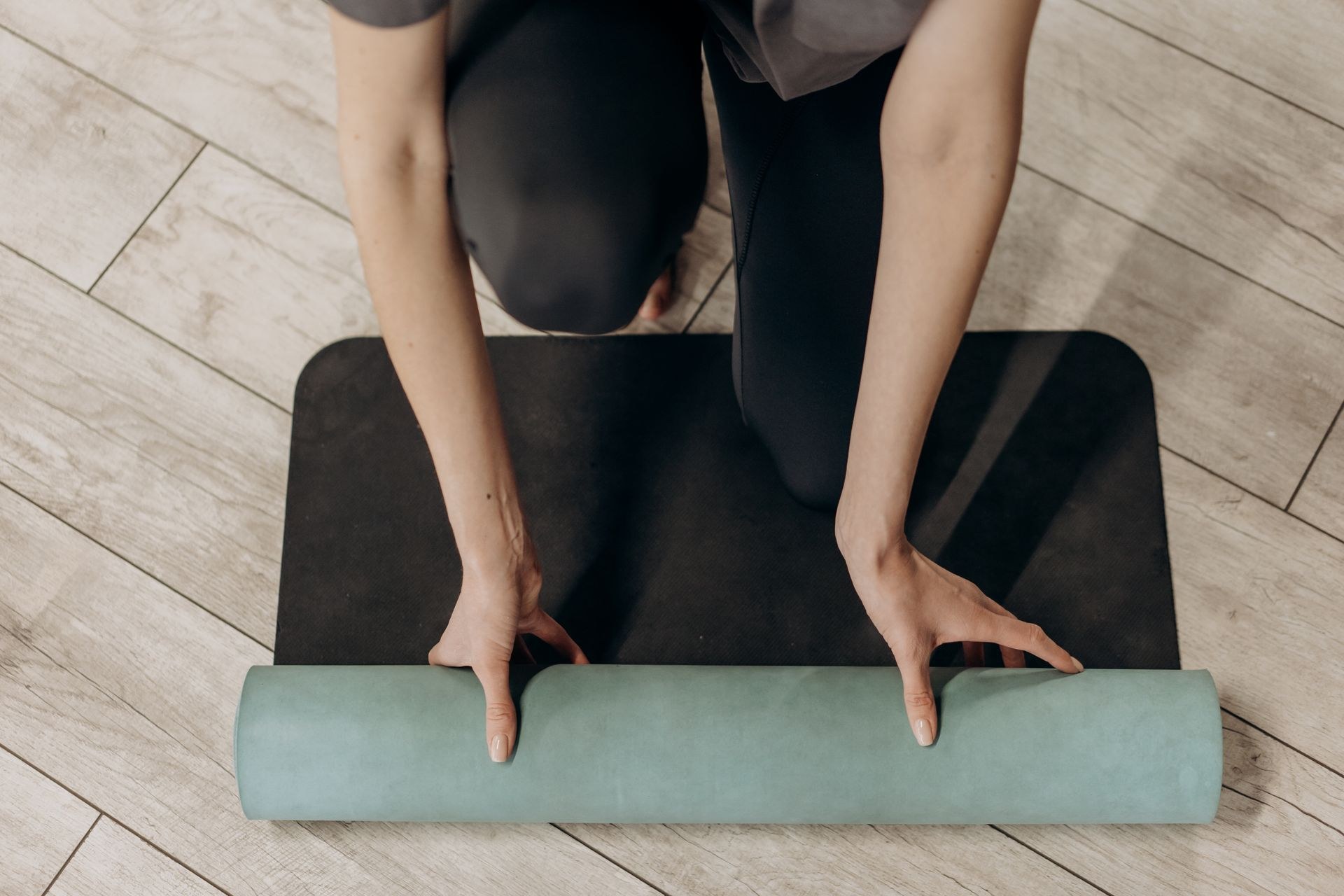
Add a walk when the day allows it
With strength anchored indoors, the walk can be opportunistic. That is the reason for building in this order. A walk skipped for weather leaves the week’s two sessions standing. A plan built around the walk would have lost its center.
The aerobic side of the same guideline is 150 minutes of moderate activity weekly, and brisk walking counts. The 150 can be broken up, so fifteen minutes at lunch and fifteen after dinner make a full day’s share. Moderate means you could talk but couldn’t sing.
A dark, icy month may not get you to 150. Walk anyway on the days you can. The guideline is plain that some activity is better than none, and a walking habit kept small through January is still there in March.
I walk after dinner most evenings and wear a headlamp from November on. Some nights it’s only around the block, and I count those, since the block is what makes the next night’s walk likely.
If you’d rather run through the winter, swap the walk for the run and leave everything else alone. On packed snow, shorten your stride and go around anything shiny.
A cold snap shouldn’t cost you the week
Some days walking outside is simply off. At 0°F with a 15 mph wind the wind chill is -19°F, and at that level exposed skin can freeze in 30 minutes. Staying in is the right call on a day like that. Since the routine was built indoors, it loses nothing.
Travel and long workdays break a routine the same way weather does, and the same fallback covers them. A hotel room has floor enough for squats, push-ups and bridges. When even the full session won’t fit, do one round and call it done. A five-minute session keeps the two-day pattern alive, while a skipped one starts a gap.
Then there is shoveling, which feels as though it ought to count as the day’s exercise. It is harder work than it looks. Heavy shoveling can be as demanding on the heart as a treadmill stress test. The American Heart Association’s advice is that people with heart disease or major risk factors shouldn’t shovel at all. If you do, push the snow where you can and lift less, take breaks, and stop at any chest pain or lightheadedness.
Where the gym fits
If you already lift at a gym, keep going, and treat the short routine as the floor under it for the weeks you can’t get there. January gyms are crowded and winter roads are slow, so those weeks will come.
The fair complaint is that a ten-minute session is too little, and for building serious strength it is. Two short sessions meet the guideline’s count of strength days, but they won’t do what a full lifting program does. It’s still the place to start. An ambitious plan pays only in the weeks you actually do it, and in winter those weeks run out quickly.
Once four weeks have passed without a missed session, add one thing: a third round, a third day or a heavier backpack. Wait for the four weeks, though, since a routine you’ve kept for a month can carry more than one you’ve just begun.
If the week goes sideways anyway, do one round on whatever day is left and start the next week on its usual days. There is no need to make anything up.
This article is for general information and is not medical advice; check with your doctor before changing your exercise routine, especially in extreme cold.