Of all the indoor cardio workouts you can do at home, fast dancing is the one to start with, and the reason sits in a single line of the federal guidelines. The Physical Activity Guidelines for Americans once counted aerobic activity only when it came in bouts of 10 minutes. That rule was dropped, and the guidelines now say any amount of activity has some health benefit.
Why does that matter in a living room? Because once short pieces count, the best workout stops being the hardest one and becomes the one you can begin in under a minute and repeat tomorrow. Three songs with the coffee table pushed aside now go on the weekly tally, and so does a march around the kitchen while a show plays.
I had this wrong for a long time. I treated anything shorter than half an hour as not really exercise, which is a tidy way to skip a lot of days, and where I live a gym trip also means planning around freeway traffic. The workouts I trust now start wherever I’m standing, although it took that one dropped rule to make me believe they counted.
What the guidelines ask for, and what they stopped asking
The guidelines come from the U.S. Department of Health and Human Services, and the headline number is that adults need at least 150 to 300 minutes of moderate-intensity aerobic activity a week, with muscle-strengthening work on at least 2 days. They give “brisk walking or fast dancing” as examples of moderate, so neither one is a consolation prize. Adults can instead aim for 75 to 150 minutes of vigorous activity, or a mix of both, and the NHLBI, which spells out that alternative, also says to talk with your healthcare provider before you start a new exercise plan.
The moderate target works out to about 20 to 40 minutes on most days, and it does not have to come in one piece. Three 10-minute dance breaks count. So the useful question about any workout on this list isn’t how punishing it is, but how likely you are to do it again on Thursday. Here are the seven, with what each one needs before you can start.
| Workout | Equipment | Impact | Best for |
|---|---|---|---|
| Fast dance cardio | None | Low to moderate | People who get bored easily |
| Brisk walking or marching in place | None | Low | Beginners and easy days |
| Low-impact circuit | None | Low | Small spaces, neighbors below |
| Stair climbing | Stairs | Moderate | Short, sharp sessions |
| Jump rope | A rope | High | Fit people with a high ceiling |
| Stationary bike or treadmill | A machine | Low (bike), moderate (treadmill) | Rain, smoke or dark evenings |
| Burpees | None | High | Very short bursts only |
Impact is how hard your feet and joints land. If your knees complain easily, start with the rows marked low. Low-impact cardio workouts are also the quiet ones, which matters when somebody lives below you.
Why does fast dancing come out ahead?
Put on three songs you already know the words to and move until they end. That is the whole setup. It needs no equipment, no gym and about six feet of floor, plus socks or sneakers, and the time passes without you watching the clock. Because the guidelines name fast dancing outright, you don’t have to wonder whether it qualifies.
It also grows with you. Keep it gentle with side steps and arm swings, or push it with bigger moves and faster songs, and it is still the same workout. Moderate effort is the target, and for most people a playlist with a steady beat is enough to find it. Keep your shoes on if your floor is hard or slick, and clear the coffee table first.
How do you know you’ve reached moderate? Use the talk test. The CDC’s rule of thumb is that at moderate effort you can talk but not sing, while at vigorous effort you can say only a few words before you pause for a breath. If you can’t talk at all, slow down.
Dancing does have a weak spot, and it is the same thing that makes it pleasant. It is easy to under-do when you’re having fun, so if you need a precise, countable workout, it will frustrate you. For anyone who has quit a routine because it felt like a chore, though, or who only has 10 minutes today, this is the one.
If dancing isn’t for you
Three other workouts on the list need nothing you don’t already have, and the plainest of them is brisk walking or marching in place. It sounds too easy, and that is why it is the safest first step. Walk laps of the house, or march with your knees lifting to a comfortable height while a show plays. The guidelines list brisk walking first among moderate activities, so it counts, and it is gentle on joints and quiet enough for an apartment. It suits beginners and recovery days, but it won’t give you a vigorous session unless you march for a very long time.
A low-impact circuit is the countable option that dancing isn’t. Think step jacks, standing knee lifts, squat reaches and a slow shuffle side to side, each for 40 seconds with 20 seconds of rest, and then repeat the round a few times. Nothing leaves the floor, so the downstairs neighbor stays friendly and your knees get a break. It fits small spaces and anyone coming back after time off. If you want a heavy sweat in 10 minutes, though, stairs or a rope do the job faster.
Stairs are the short, sharp choice, because if your home has a staircase you already own a cardio machine. They raise your breathing fast, so a brief session feels like a real workout. Go up at a steady pace and walk down slowly, holding the rail, and keep it to a few minutes at first, since your thighs will tell you about it tomorrow. Skip the stairs if you have balance concerns or wobbly knees, or if the staircase is dim or cluttered.
What a machine or a rope adds, and why burpees add little
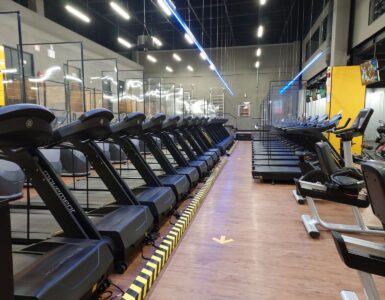
A stationary bike or a treadmill takes the thinking out of it. You press start, and the pace is set. That is worth the money and the floor space when you want the same session every day regardless of rain, wildfire smoke or an early sunset. Bikes are easy on the knees, and a treadmill lets you walk or jog at a pace you control. If you already run, these winter running tips cover when the treadmill is the smarter option. Skip a machine if you don’t have the room or the budget, because every other workout here works without one, and a machine that becomes a clothes rack helps nobody.
A jump rope is cheap and small, and it turns up the effort quickly. It is also the most demanding item on the list, since you need a high ceiling, a forgiving floor and ankles that like landing. Start with 20 seconds on and 40 seconds off, and stop when your form gets sloppy. It suits people who already run or play sports and want a short, hard session. Leave it alone if your joints are touchy, you live above someone, or your ceiling is low.
Then there are burpees, which have a reputation as the ultimate home cardio move and which I wouldn’t bother with as a main workout. Each one is a squat, a drop to the floor, a kick back, a push-up and a jump, and the form tends to get sloppy as you tire. Beginners often stop after a handful, so they get less cardio than a steady dance session would give them. That is the dropped rule working in reverse: minutes are what add up across a week, and a move you abandon after a handful doesn’t supply many.
If you like burpees, do a few as an occasional spice, not the main course. They suit fit people who want a very short burst. Skip them if you are new to exercise, have back or joint trouble, or know you will rush your form. A longer, steadier workout does more for most people, and it is far easier to keep doing.
A 20-minute plan for the first month
This plan strings together the gentle pieces from above, so there is nothing new to learn. Stay where you can talk but not sing for most of it.
- Minutes 0 to 3: march in place and swing your arms to warm up.
- Minutes 3 to 8: dance to two songs, steady and moderate.
- Minutes 8 to 10: take a short walk around the house to catch your breath.
- Minutes 10 to 15: do five rounds of the low-impact circuit, 40 seconds on and 20 off.
- Minutes 15 to 20: walk slowly, then stretch your calves and thighs.
Do it three days a week for the first month. That comes to 60 minutes, so add a dance break or a walk on other days to build toward the 150 minutes in the guidelines. It looks modest on paper, and it is meant to, because keeping it small is what gets a fitness habit through its first few weeks.
If the full plan feels like too much, go in order instead. Try dance cardio for 10 minutes and see if you finish smiling. If that is not your style, march or take the stairs, and add the low-impact circuit once 10 minutes feels easy. Leave the jump rope and burpees until you have a few steady weeks behind you.
A little stiffness the next day is common. If anything feels sharp, dizzy or just wrong, stop and check with your doctor.
Frequently asked questions about indoor cardio workouts
How long should an indoor cardio workout be?
Start at 10 to 20 minutes. The U.S. guidelines say any amount counts, so a short session is not a wasted one. Build up slowly, and let the weekly total grow before you make single sessions longer.
Can you get enough cardio at home without equipment?
Yes. Dance, brisk walking, stairs and a floor circuit can all reach moderate effort, which is what the 150-minute target is built on. Equipment makes the routine easier to repeat for some people, but it is not required.
What is the best indoor cardio workout for beginners?
Brisk walking or marching in place, then dance cardio once you are comfortable. Both are low-impact and easy to stop or slow down. Check with your doctor first if you have a heart, joint or breathing condition.
Is indoor cardio as good as running outside?
It can be. What matters is how long and how hard you work and whether you keep at it, and indoors it is easier to show up in a heat wave, in smoke or after dark. Pick the one you will do three days a week over the one that sounds better.
This article is for general information and isn’t medical advice. Talk to your doctor before starting a new exercise routine, especially if you have a health condition.