You’ve probably been told to rest, and you’ve probably also been told to keep moving, and nobody stopped to explain why both pieces of advice can be true at the same time. That’s the gap this is meant to close. Recovery isn’t a single thing you either do or skip. It’s a set of overlapping processes happening on different timelines inside you, each with its own requirements, and understanding what’s actually going on lets you stop guessing.
You’ll learn what your muscles are doing in the hours after you train them, during your body’s repair cycle; why soreness peaks when it does, how blood flow changes what your tissue receives, and where light movement genuinely helps versus where it quietly costs you. You’ll also learn when doing nothing at all is the more sophisticated choice. None of this requires you to become obsessive or to track every variable. It just gives you a clearer map, so the next time you wake up stiff and uncertain, you’ll know what your body is asking for instead of flipping a coin.
What Your Body Is Actually During It’s Repair Cycle

Start with the mechanical damage, because that’s the part you feel. When you train hard, particularly through eccentric movement, the lengthening phase where your muscle resists load while stretching, you create microscopic disruptions in the muscle fiber structure. Specifically, you damage the z-discs that anchor contractile units together, and you disturb the sarcolemma, the membrane surrounding each fiber. This isn’t injury. It’s the signal your body reads as instruction to rebuild stronger.
The repair sequence follows a reliable order. Within minutes, inflammatory cells begin migrating toward the damaged tissue. Neutrophils arrive first, clearing debris. Macrophages follow within roughly 24 hours, and they do something more interesting than cleanup. They release signaling compounds that activate satellite cells, the dormant stem cells sitting alongside your muscle fibers. Those satellite cells proliferate, fuse with existing fibers, and donate their nuclei, which is what ultimately lets the fiber synthesize more contractile protein than it had before.
You should know that protein synthesis rates stay elevated for roughly 24 to 48 hours after a training session, sometimes longer in less-trained people. That’s your actual repair window. Everything you do in that period either supports or interferes with it.
Why Soreness Peaks When It Does

Delayed onset muscle soreness typically arrives 12 to 24 hours after training, peaks somewhere between 24 and 72 hours, and resolves within five to seven days. You’ve felt this timeline. It’s colloquially referred as the recovery or repair cycle. What you may not know is that the soreness itself isn’t caused by the muscle damage directly. It’s caused by the inflammatory response to that damage, specifically the swelling and the sensitization of nerve endings in the connective tissue surrounding the muscle.
This distinction matters more than it sounds like it should. Soreness is a poor proxy for how much adaptation you generated. You can be extremely sore from a novel movement that produced modest growth stimulus, and you can be barely sore from a session that drove substantial adaptation. If you’ve been using soreness as your scorecard, you can set that down. It was never measuring what you thought it was measuring.
What Active Recovery Actually Does

Active recovery, which is distinct from your body’s repair cycle, means low-intensity movement performed at roughly 30 to 60 percent of your maximum heart rate, or in practical terms, an effort where you could hold a full conversation without noticing your breathing. Walking. Easy cycling. Swimming at a relaxed pace. Mobility work. The intensity ceiling matters enormously here, and it’s the thing most people get wrong.
The mechanism is circulatory. Light rhythmic contraction increases blood flow to working tissue without generating meaningful additional damage. More blood flow means more oxygen delivery, more nutrient delivery including amino acids for protein synthesis, and more efficient removal of inflammatory byproducts and metabolic waste. Your muscles also function as a pump for your lymphatic system, which has no pump of its own and relies entirely on muscle contraction and breathing to move fluid. Gentle movement helps drain the swelling that’s contributing to your soreness.
There’s a nervous system component too. Low-intensity aerobic work tends to shift you toward parasympathetic dominance, the rest-and-digest state where recovery processes run most efficiently. Heart rate variability, which reflects this balance, often improves after easy movement in a way it doesn’t after complete stillness.
You’ll typically notice the effect as reduced stiffness and a subjective sense of looseness. That’s real, and it’s worth having. Just know that the research on whether active recovery meaningfully accelerates the underlying tissue repair is genuinely mixed. It reliably helps how you feel. Whether it speeds the repair itself is less certain, and anyone telling you otherwise with total confidence is overstating things.
What Complete Rest Actually Does

Complete rest means you’re not training, and you’re not doing structured movement designed to promote recovery. You’re living your ordinary life. This is not laziness, and you’re allowed to take it, its implicit within your body’s repair cycle.
The case for full rest rests on a few specific mechanisms. Your central nervous system fatigues independently of your muscles, and it recovers on a slower timeline. After heavy loading, particularly compound movements near maximal effort, your motor unit recruitment efficiency drops and stays depressed for longer than your muscle tissue takes to repair. Continued movement, even light movement, provides some ongoing demand. Sometimes what you need is genuine reduction in total input.
Your connective tissue also recovers more slowly than muscle. Tendons and ligaments have substantially lower blood supply, and collagen turnover operates on a timeline measured in days to weeks rather than hours. If your joints feel achy rather than your muscles feeling sore, that’s a signal pointing toward rest rather than movement.
Sleep is where the most consequential recovery happens, and it belongs in this section because it’s the one variable that outweighs nearly everything else discussed here. Growth hormone release concentrates in slow-wave sleep during the first half of the night. Protein synthesis, memory consolidation for motor patterns, and inflammatory regulation all depend on adequate sleep duration. You can execute every recovery protocol perfectly and undo most of it by sleeping five hours. If you only change one thing after reading this, make it that one.
How To Choose Between Them
Here’s the practical framework, and it’s simpler than the preceding detail might suggest. Both processes contribute to your body’s repair cycle.
Choose active recovery when you’re muscularly sore but systemically fine. You slept reasonably well, your appetite is normal, your mood is steady, your resting heart rate is where it usually sits, and the discomfort is localized to the muscles you trained. Light movement will likely make you feel better and won’t cost you anything.
Choose complete rest when the fatigue is systemic rather than local. Elevated resting heart rate, disrupted sleep, unusual irritability, persistent loss of appetite, joint discomfort rather than muscle soreness, or a general sense of heaviness that doesn’t correspond to any specific session. These are signs your nervous system and endocrine system need reduced total load, not redistributed load.
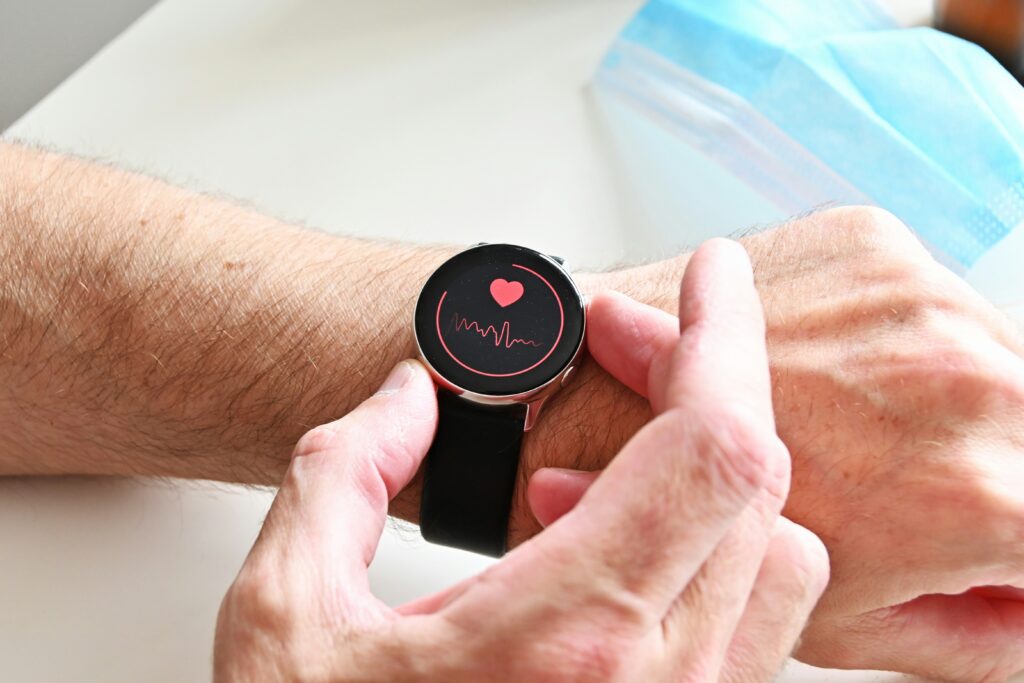
You can check your resting heart rate each morning before getting up, if you want a simple objective input. A sustained elevation of five to ten beats above your normal baseline usually indicates incomplete recovery. But you don’t have to do this. Your subjective sense of how you feel is a surprisingly good instrument once you’ve practiced listening to it for a while.
Building the Week
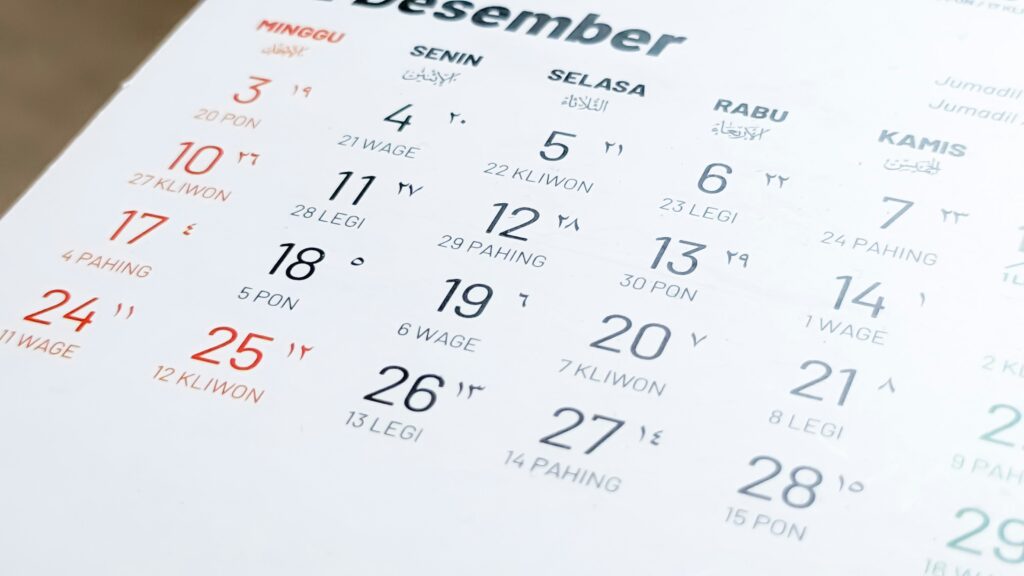
A reasonable structure gives you one to two fully unstructured days per week and uses active recovery on the days between hard sessions. If you train four days, you might place light movement on two of the off days and take one day with nothing scheduled at all.
Time your active recovery well away from your hard sessions. Same-day light movement, performed several hours after training, works fine. Light movement the morning before an intense afternoon session is generally counterproductive. Give yourself at least six hours of separation where you can.
Keep the intensity honest. The single most common error is letting active recovery drift upward until it becomes a moderate session, at which point it stops being recovery and starts being additional accumulated fatigue. If you find yourself breathing hard, you’ve left the zone.
Permission To Adjust

None of this is a contract. Your recovery needs will shift with your age, your sleep, your stress load outside the gym, your nutrition, your training history, and factors nobody has fully mapped. A protocol that served you beautifully last year may not fit you now, and that isn’t regression. It’s just information.
If you take one week completely off and come back feeling better than you have in months, that’s your body telling you something worth hearing. If you skip a scheduled rest day because you feel genuinely good, that’s usually fine too. The framework exists to serve you, not to be obeyed.
Be patient with yourself while you’re learning to read your own signals. It takes time, and you’ll misjudge sometimes, and that’s entirely allowed. You’re building a skill, and the fact that you’re paying attention at all already puts you ahead of where most people start.